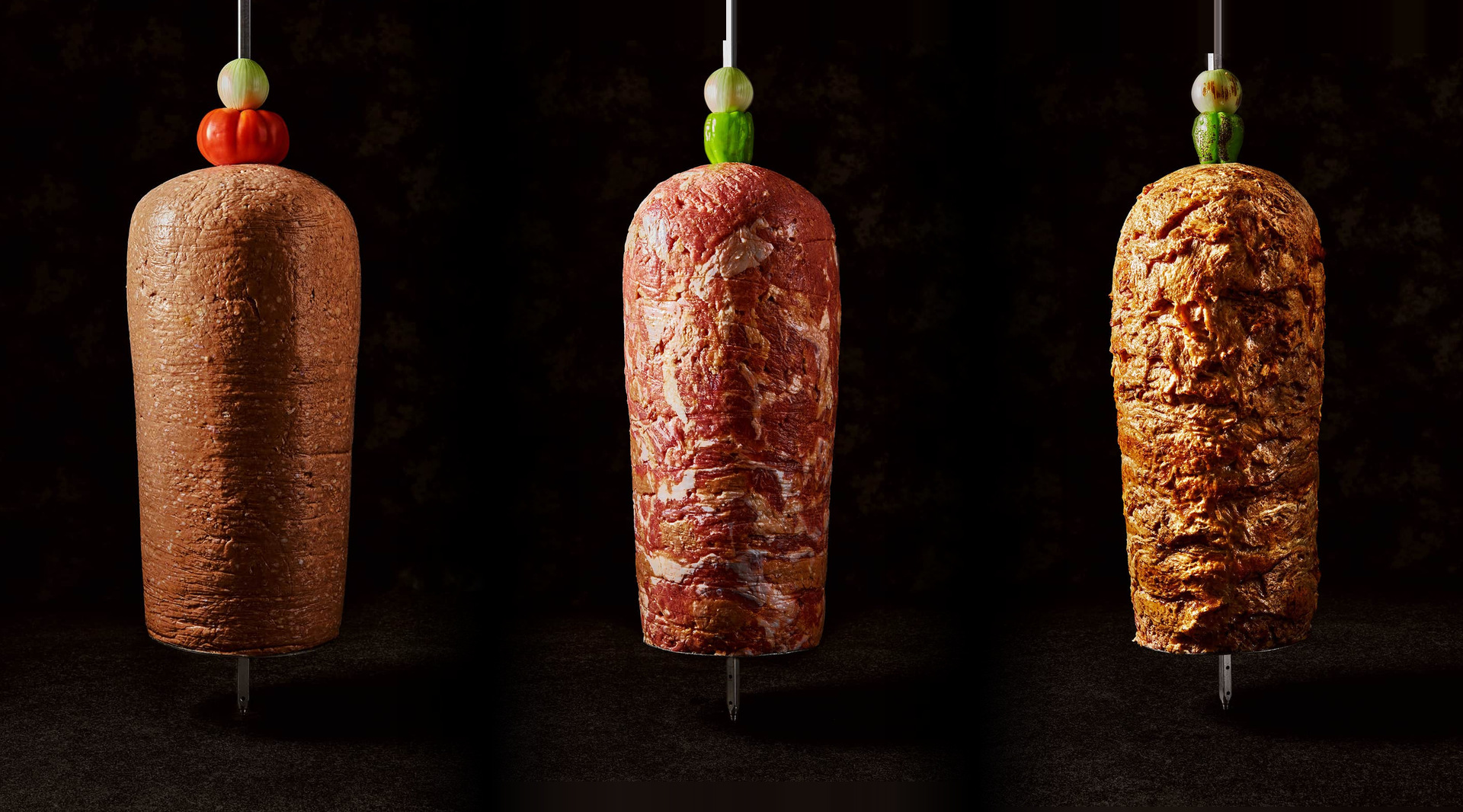
Döner kebab spits wholesale: what snack bars and caterers check before buying
Minced or sliced? Make-up, origin, shelf life and preparation according to the data sheet: the buying checklist for döner spits.
When buying döner spits wholesale, compare five things: how the spit is made, its size, where the meat comes from, how it is prepared, and the data sheet. PIYA makes döner spits in Winterthur and supplies the food service trade and retail. All information on this page comes from PIYA’s product specifications.
1. Which make-up suits your menu?
The data sheets distinguish three types, sorted here by the “appearance” entry. For every article the origin is listed in the ingredients (CH = Switzerland).
Ground meat (data sheet: “typical sausage-meat mass”):
- Prime – CH (art. no. 1110510): beef, chicken and beef fat (CH)
- Star (art. no. 1110310): beef (CH), poultry (Brazil)
- Gold (art. no. 1110110): poultry (Brazil), beef (CH)
Layered meat slices, seasoned:
- Roter Rubin – CH (art. no. 1120610): chicken (Switzerland)
- Smaragd (art. no. 1120910): poultry (Brazil), veal (CH)
- Rubin (halal) (art. no. 1121010): chicken (Brazil), halal
- Opal (art. no. 1122110): beef (CH)
- Platin (art. no. 1110410): beef (Ireland), poultry (Brazil)
Conical cylinder, meat-coloured:
- Origin Veal – CH (art. no. 1120410): veal, beef and chicken (CH)
- Origin Chicken (art. no. 1122010): chicken thigh (EU)
- Perle – CH (art. no. 1120710): veal (Switzerland)
2. How large, and how long do they keep?
The spits are round. The diameter given in the data sheets is up to about 30 cm, mostly about 20 to 30 cm. Most articles keep for 180 days from production (Platin: as stated on the packaging). Store only in the freezer at −18 °C or colder. Once thawed, the spit must be used immediately and not refrozen. Packaging units are listed on each product page.
3. Where does the meat come from, and is there halal?
The data sheets state the origin for each ingredient, for example “beef (CH)” or “poultry (Brazil)”. Among the spits, the data sheet of Rubin (halal) lists halal chicken and the property “Halal certified: yes”. For the other articles the data sheet lists no halal certification. If your guests ask about origin, give the information from the data sheet, not an assumption.
4. How is the spit prepared?
According to the data sheet: roast the frozen döner kebab on the rotating grill for about 10 to 15 minutes at medium heat, cut the meat into thin strips and season to taste.
5. What is in the data sheet?
Every article has a data sheet with ingredients, nutritional values per 100 g, allergens, shelf life, storage and production site (Piya AG, Winterthur). You find it on the product page. It saves you asking the supplier when you update your menu and declarations.
What if it should not be a spit?
For businesses without a döner grill there are cooked, sliced convenience articles. A plant-based alternative is PIYA Plant Kebab: vegan according to the data sheet, cooked and sliced. It is not a spit.
Frequently asked questions
What is the difference between ground-meat and sliced spits? According to the data sheets, ground-meat spits are “typical sausage-meat mass”, sliced spits consist of “layered meat slices, seasoned”.
How large are the spits? They are round, with a diameter of up to about 30 cm. Packaging units are listed on the product page.
How long do they keep? Most articles keep for 180 days from production, stored in the freezer at −18 °C or colder.
Is there a halal-certified spit? The data sheet of Rubin (halal) lists “Halal certified: yes”. For the other spits this statement is not in the data sheet.
Is there a plant-based alternative? Yes, PIYA Plant Kebab. It is cooked and sliced, not a spit.
How do I order? Request a quote through the contact form. There is no online shop.
Status of the information: PIYA AG product specifications, October 2026.